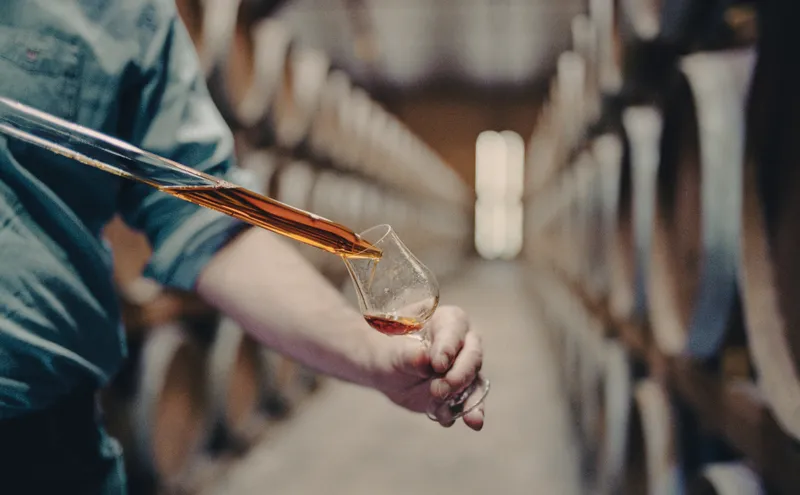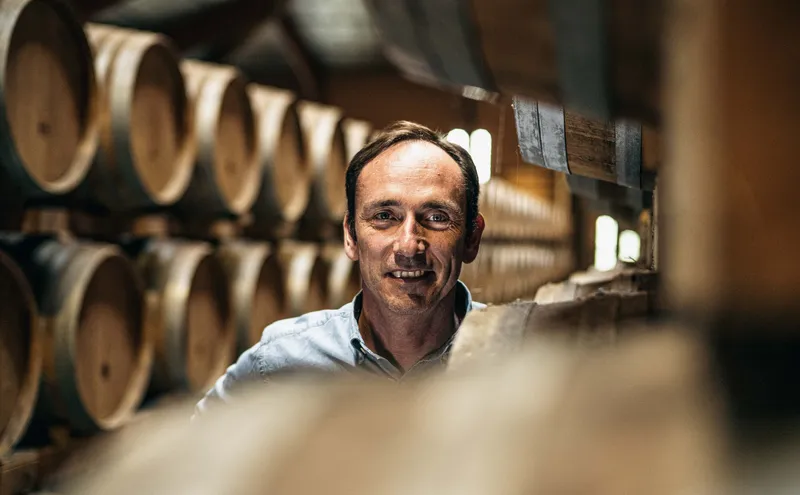
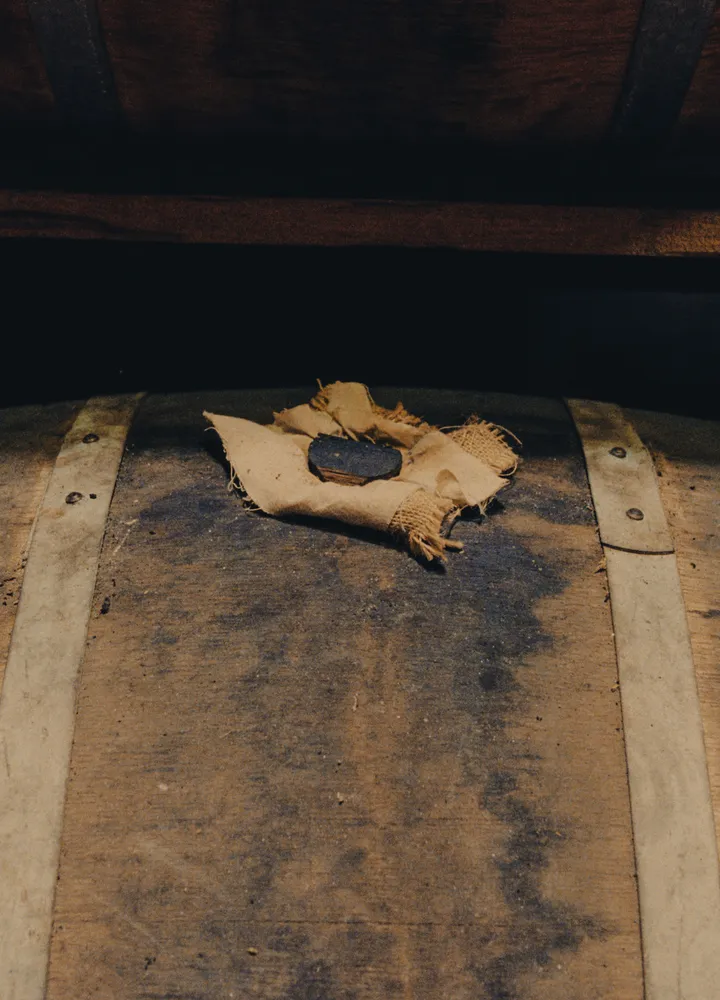
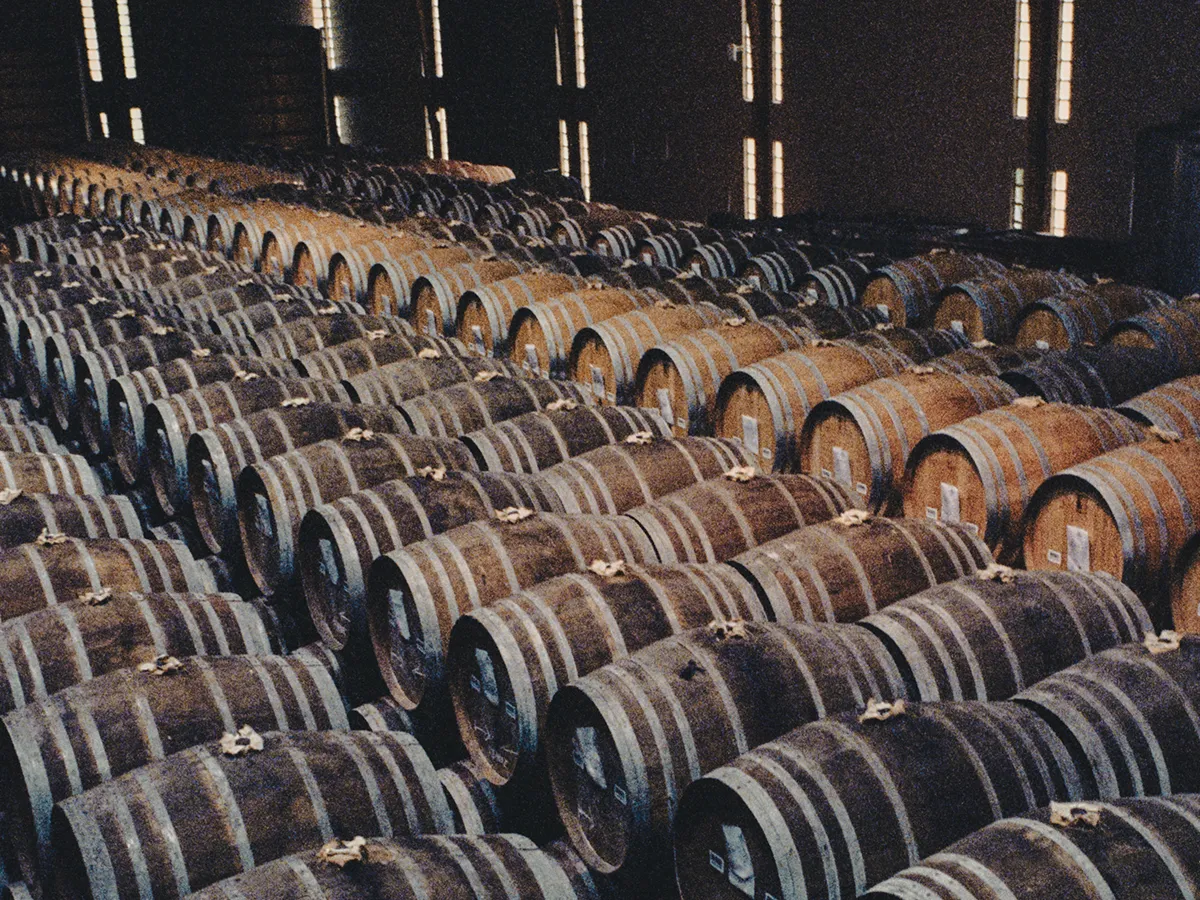
In our opinion, Armagnac shouldn’t be too oaky and needs to have somehow “digested” its ageing in wood. It’s about the right balance, or more precisely about the harmony amongst a variety of flavours.
Following distillation, the eau-de-vie typically has an alcohol content of around 52% ABV and is filled into French oak casks at this strength. Bottling generally takes place at an alcohol level between 40% and 48% ABV. Successful maturation depends on achieving a balance between the influence of the oak and the intrinsic character of the spirit. New barrels primarily provide color and tannins, while more delicate aromas and complex nuances develop later through oxidative aging in older casks. Traditional practice in Gascony emphasizes the importance of well-seasoned oak. A local saying suggests that Armagnac should mature in wood that has long been exposed to natural weathering. During the preparatory phase known as lessivage, undesirable compounds are gradually leached from the wood, reducing the risk of excessive bitterness in the spirit. For this reason, barrel staves are commonly stored outdoors prior to cooperage, with optimal results typically achieved using wood that has been weathered for at least 24 months. Local oak (Quercus pedunculata), characterized by a relatively wide grain structure, plays an important role in maturation; when subjected to medium to heavy toasting, it contributes significantly to both color development and tannin structure. The characteristics of the aging cellars (chais) also strongly influence the evolution of Armagnac. Humidity levels are particularly important: in humid cellars, alcohol evaporates more rapidly, resulting in a softer and rounder spirit. In drier environments, water evaporates more quickly, leading to a more concentrated brandy with a higher alcohol strength.